

You don’t have to hide the shortcomings of the men in your life with me. They are theirs.
You don’t have to tell me he loves you before you tell me how he hurts you. You don’t have to remind me that he had a hard life.
You don’t have to explain that he gets overwhelmed, shuts down, loses his temper, doesn’t know how to communicate, never learned how to apologize, or comes from a generation that didn’t talk about feelings.
You don’t have to hand me his entire history before you are allowed to have your own.
You don’t have to say, “That’s just Dad.” Or your husband. Your brother. Your son. The man you built a family with.
You don’t have to pretend you don’t notice that everyone knows which subjects to avoid. That you can hear something in his voice before he has even said anything wrong.
That you know when to leave him alone. When not to ask. When to wait until tomorrow. When to let it go because dealing with his reaction will take more out of you than carrying the thing yourself.
You don’t have to call that peace. You don’t have to keep translating anger into stress.
Or distance into independence. Or silence into privacy. Or unreliability into “he means well.” Or cruel words into “he was upset.” Or a refusal to repair into “he just needs time.”
You don’t have to make someone easier to understand simply because you love them. And you don’t have to stop loving them in order to stop doing it.
That may be the hardest part.
Because these aren’t random men.
They’re family.
Their photographs are in your house. Their names are woven through your memories. You know what makes them laugh. You know what broke their hearts. You remember them young. You remember the good years. You know the parts of them that are tender and funny and generous and deeply human.
Of course you love them. And sometimes they still disappoint you. Sometimes they hurt you. Sometimes they frighten you. Sometimes they leave you carrying something they should have picked back up.
The people we love will get things wrong. We will too. But getting something wrong and refusing to look at what happened afterward are not the same thing.
We don’t need perfection from the people in our lives.
We need what we try to give them when we are the one who gets it wrong: the willingness to look at it.
To care about the impact. To own what is mine. To come back. To try again differently.
So tell me the truth about the men in your life. You never have to make them villains for me. And you never have to make yourself their alibi.
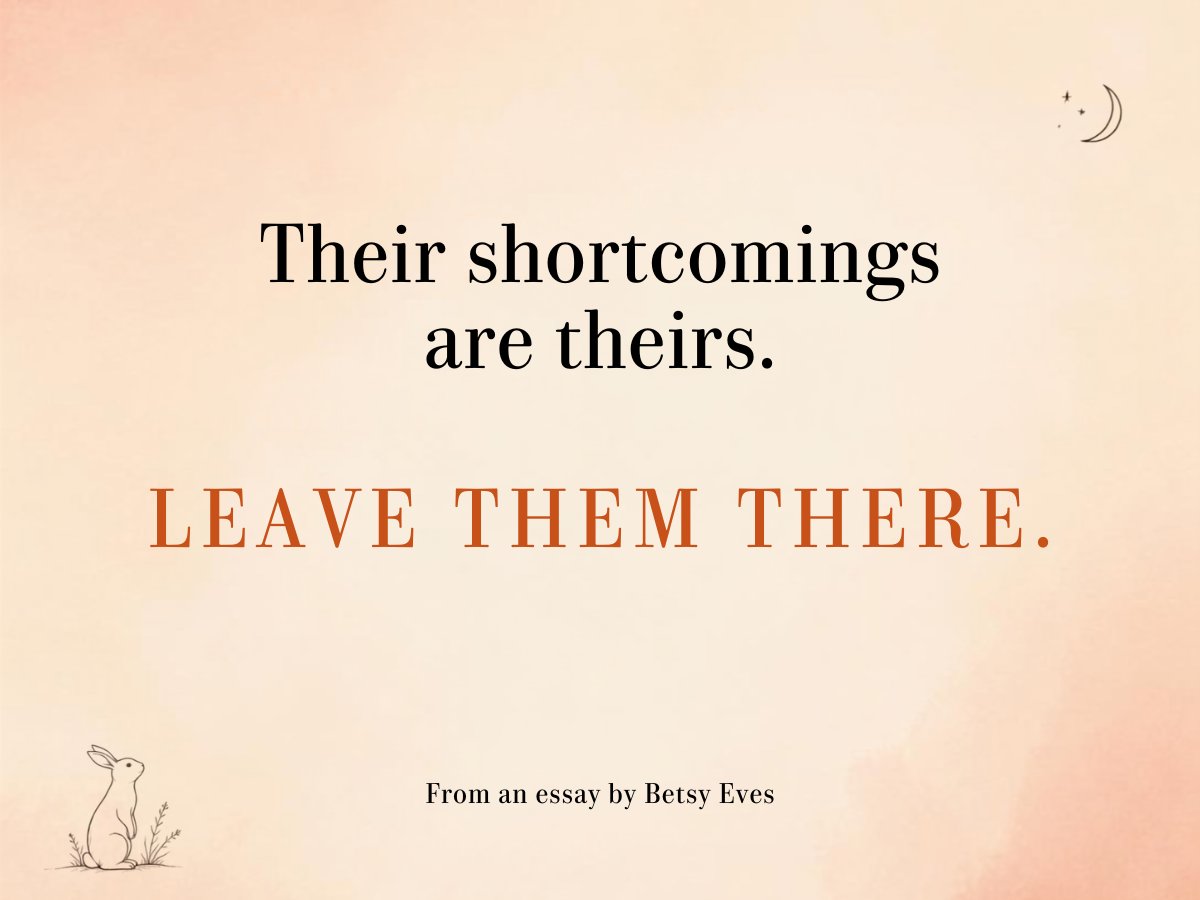
Their shortcomings are theirs.
Leave them there.
If this felt familiar, I’ve been writing around different parts of this same truth for a while.
- You’ve Changed is about what happens when boundaries look like rejection to people who were comfortable with the version of you who carried more.
- Caregiving Has an After is about what remains when years of carrying someone else’s needs finally change shape.
- Behind Closed Doors goes deeper into the complicated place where love, caregiving, empathy, trauma and harmful behavior can all exist in the same family.
- The End of an Era is part of my own story of finally understanding that loving someone and continuing to carry what belongs to them are not the same thing.

