

For the first time in my life, I am not celebrating Veterans Day.
Not because I have lost respect for military service. I have spent much of my life supporting military families, volunteering within Army communities, and advocating for veterans and their caregivers. But the two veterans who shaped my family are no longer in my life because of how they treated me outside the uniform.
I grew up with a Vietnam-era veteran father. Years later, I raised two children with a veteran of the Global War on Terror: my daughter, whom he adopted, and our son. I have experienced the consequences of a veteran’s conduct at home as a child, a spouse, and a parent.
And I know we are not alone.
Research suggests that experiences like ours are not isolated. In a Military Family Advisory Network survey, roughly one in five surveyed spouses of post-9/11 veterans reported seeking help for a physical, emotional, or verbal dispute with their partner in the previous two years. A 2026 study also found higher rates of intimate partner violence, including psychological aggression, among veteran couples than among couples still serving in the military.
These findings leave much of the family experience unexplored, particularly for children. Of 15 studies reviewed on military-family violence interventions, only three examined outcomes for children.
We publicly recognize veterans for their service, sacrifice, and courage. Yet our gratitude rarely makes room for spouses and children whose experiences with those same veterans tell a different story.
Military service can be honorable without every action of the person who served being honorable. The values of integrity, respect, courage, and accountability cannot apply only within the military. They must extend to the people who share a veteran’s home.
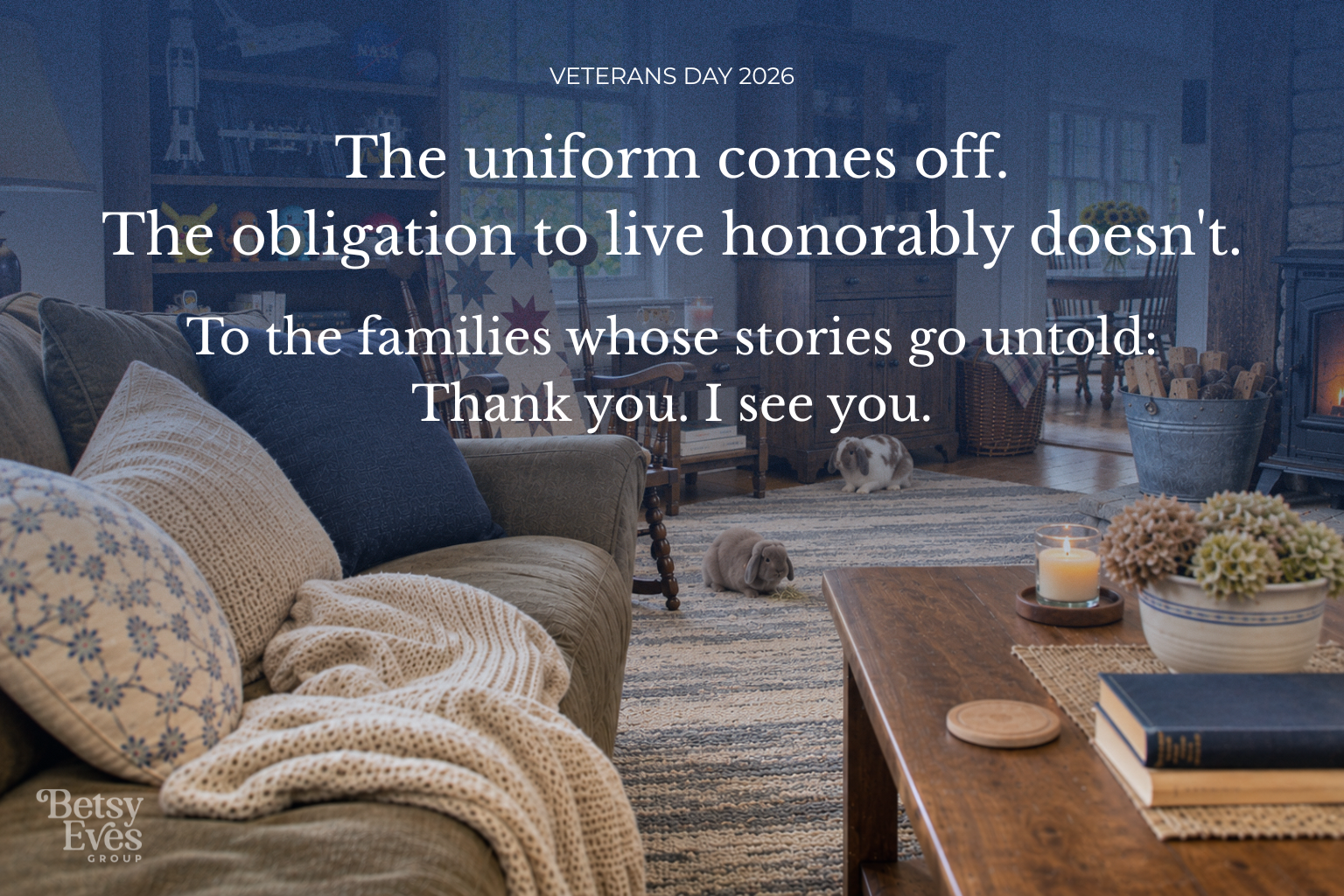
The uniform comes off. The obligation to live honorably doesn’t.
So this Veterans Day, my gratitude goes to the spouses, former spouses, children, and other family members who learned to choose their words carefully, anticipate someone else’s moods, or excuse hurtful behavior while the person responsible was publicly thanked for their service.
To those who stayed, those who left, and those still deciding. To the adult children making sense of their childhoods and the parents trying to give their children something different.
Your experiences belong in the military-family story, too.
Thank you. I see you.